
Bathroom Tile Installation: Types, Trends, and Cost Factors
Planning a bathroom update? Choosing the right tiles is one of the most important decisions you'll make. The tiles you select can change how your bathroom looks, how easy it is to clean, and how well the space handles everyday moisture.
Request a Free EstimateBut choosing attractive tiles is only part of the job. You also need to think about where they will be installed, how the surface will be prepared, and what type of finish will work best.
Whether you're updating an old bathroom floor or planning a new shower area, understanding the basics can help you make better decisions. In this guide, we'll look at different types of bathroom tile installation, popular design ideas, and the factors that affect installation costs.
Bathroom tile installation in Surrey typically comes to around $5 per sq. ft. This is an approximate figure, not a fixed rate. The final cost depends on the tile you choose, the layout, how much surface preparation and waterproofing the job needs, and the size of the area. The most accurate number comes from a written estimate, so you can request a tile installation quote based on your actual bathroom.

Choosing the Right Tiles for Bathroom Installation
Walk into a tile showroom and you'll find plenty of options. From simple ceramic designs to large porcelain tiles and natural stone finishes, the choices can feel overwhelming.
Instead of choosing based on appearance alone, think about where the tiles will go and how you'll use the space.
Ceramic Tiles
Ceramic tiles are a familiar choice for bathroom walls and suitable floor areas. They come in a wide range of colours, patterns, and sizes, so it's easy to find something that fits your bathroom design.
They're often used around vanities, on feature walls, and in other bathroom areas. If you're considering them for the floor, check that the particular tile is rated for floor use and offers a suitable surface finish.
Porcelain Tiles
Porcelain tiles are another popular option. They're generally denser than standard ceramic tiles and are available in designs that resemble marble, natural stone, concrete, and wood.
You can use suitable porcelain tiles on bathroom floors, walls, and shower surfaces. Their appearance also makes it easier to create a consistent design throughout the room.
Choosing the Right Size and Finish
Tile size can make a noticeable difference to the finished bathroom. Large-format tiles create fewer grout lines and can give a space a clean, open appearance. Smaller tiles are often useful around drains, shower floors, and areas that need more detailed cuts.
The finish matters too. A polished tile may look attractive on a wall, but a suitable slip-resistant surface is generally a better choice for wet floor areas.
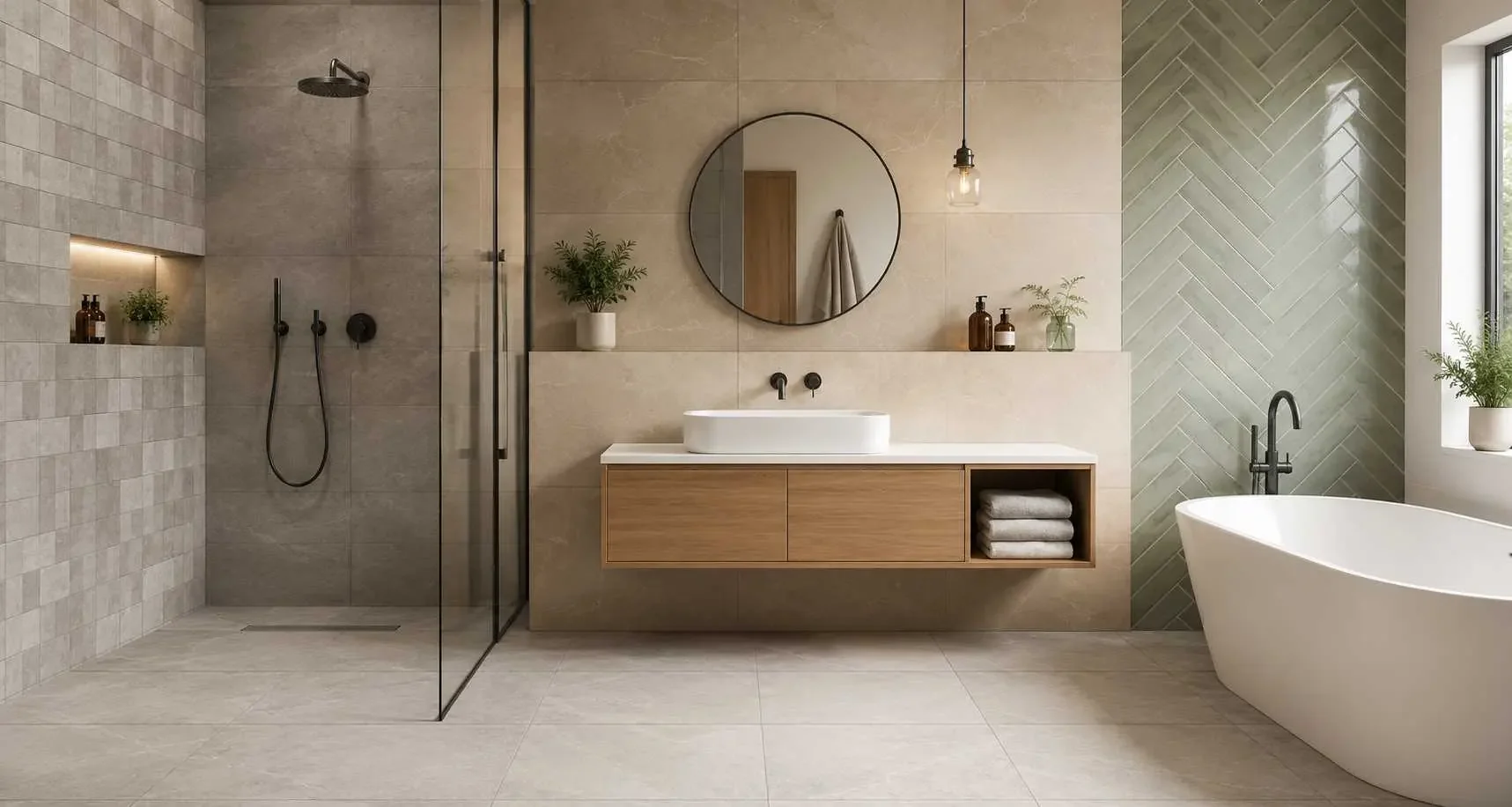
Types of Bathroom Tile Installation
Not every part of a bathroom needs the same type of tile or preparation. Floors, walls, and shower areas each have their own requirements. Here's what to consider before choosing tiles for these spaces.
Bathroom Floor Tile Installation
Your bathroom floor deals with regular foot traffic, splashes, and everyday moisture. That's why choosing the right tile and preparing the surface properly are both important.
Before bathroom floor tile installation begins, the existing floor should be checked for uneven areas, loose sections, or damage. The surface needs to be stable and suitable for the selected tile.
Once preparation is complete, the installer plans the layout. This helps make sure the tiles fit neatly around walls, doorways, and other fixtures. Tiles are then placed using an appropriate adhesive, with consistent spacing between them.
Taking time with the layout can make a big difference. It helps avoid awkward cuts and gives the finished floor a more balanced appearance.

Bathroom Wall Tile Installation
Wall tiles can make a bathroom feel brighter, cleaner, and more finished. They're commonly used around vanities, bathtubs, and other areas where a practical, easy-to-clean surface is useful.
For Bathroom Wall Tile Installation, the wall needs to be checked before work begins. It should be stable, properly prepared (with drywall taping and mudding completed where needed), and suitable for the chosen tile.
The installer also needs to plan around corners, taps, outlets, and other fixtures. Careful measuring helps keep the layout balanced and the tile lines consistent.

Shower Tile Installation
The shower is one area where installation details really matter. These surfaces are exposed to water regularly, so proper preparation and waterproofing should be part of the plan.
Shower Tile Installation starts with checking the substrate and making sure the waterproofing system is suitable for the area. The floor also needs the correct slope towards the drain so water doesn't collect in unwanted spots.
Tile selection is important here as well. Choose products that are suitable for wet areas, particularly for the shower floor. The installer must also work carefully around drains, niches, corners, and fixtures.

Common Bathroom Tile Installation Mistakes to Avoid
Even a well chosen tile can look disappointing if the installation is rushed or poorly planned. These are some of the most common mistakes to watch for.
Skipping Surface Preparation
Tiles follow the surface beneath them. If a floor or wall is uneven, damaged, or not properly cleaned, tiles can sit unevenly, loosen, or crack over time. Checking and repairing the surface first gives the installation a stable base.
Incorrect Tile Spacing
Inconsistent gaps make grout lines look uneven and can throw off how the layout meets walls and fixtures. Spacers and a planned layout help keep joints even and avoid thin slivers of tile at the edges.
Using Unsuitable Adhesive
Different tiles and surfaces need different adhesives. Large format porcelain, natural stone, and ceramic wall tile do not always use the same product. Choosing an adhesive that suits the tile and the area supports a stronger bond.
Ignoring Waterproofing Requirements
Showers and areas around bathtubs deal with regular water. Tiling without a suitable waterproofing system can let moisture reach the structure behind the surface, and repairs later can be costly. Waterproofing should be planned before any tile goes up.

Modern Bathroom Tile Installation Trends in 2026
You don't need an elaborate design to make your bathroom look great. Sometimes a simple tile choice, a well-planned layout, or a small feature wall is enough to change the entire feel of the room.
Here are a few styles worth considering.

Bathroom Tile Styles Worth Considering
Textured and Natural-Look Tiles
Tiles inspired by natural stone, wood, and other materials can add warmth and character to a bathroom. Textured finishes can also create visual interest without making the design feel too busy.
For floors, always check that the finish is appropriate for wet conditions.
Large-Format Tiles
Large-format tiles are a good option if you prefer a clean, modern appearance. With fewer grout joints, the finished surface can look more continuous.
They can work particularly well on larger bathroom walls and floors. However, the surface needs to be properly prepared, and accurate installation is important.
Neutral and Earthy Colours
Beige, warm grey, white, and stone-inspired shades are easy to coordinate with bathroom cabinets, countertops, and fixtures.
If you want a bathroom that feels calm and comfortable, these colours are worth considering.
Geometric and Decorative Patterns
Want to add a little personality? Geometric tiles, mosaics, and decorative patterns can create an attractive feature without covering every wall.
You could use them behind a vanity or in a selected shower area to give the space a focal point.
Why Professional Bathroom Tile Installation Matters
Bathroom tile has to handle moisture, daily use, and tight spaces, so the quality of the installation matters as much as the tile itself. A professional installer brings careful planning to each stage of the job.
- Proper surface preparation
- Accurate tile alignment and spacing
- Suitable adhesive and grout selection
- Careful finishing around corners and fixtures
Together, these details help the finished bathroom look consistent and perform well for years.

Planning a Bathroom Tile Project?
Tell us about your bathroom and Citified Planning & Construction will walk you through tile options, preparation and timing.