Taping
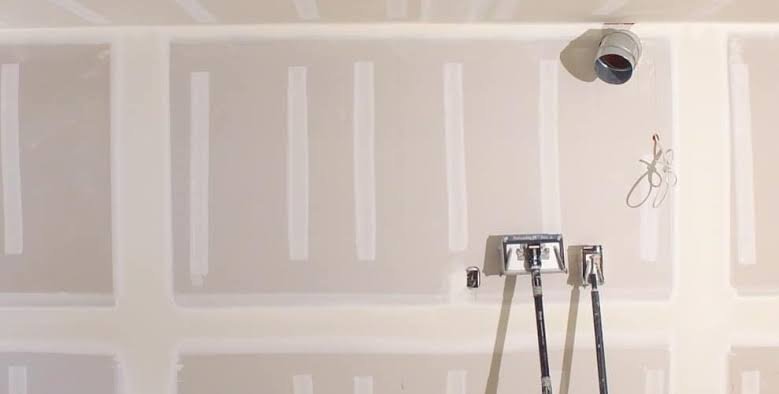
We bed tape into compound over every joint and corner, so the seams are locked in before any coats go on.
Smooth wall finishes, ready to paint, for new builds, renovations, and repairs. Citified Planning & Construction Ltd. has been finishing drywall across Surrey and the Lower Mainland since 2017, and this is still the service our reputation was built on.
Request a Free EstimatePut simply, tape goes over the joints between drywall sheets, and layers of joint compound, often called "mud", cover the tape and the screw heads. Once the mud dries, it gets sanded flat so the wall looks like one smooth surface.
Drywall mudding and taping in Surrey typically costs around $2 per sq. ft., though the final price depends on the job.
Drywall mudding and taping is the step between a rough framed wall and a surface that is ready for primer and paint. It is also the step most likely to show if it was rushed. Citified's crews pay close attention to seams, inside and outside corners, and transitions between wall and ceiling, so the finish holds up under direct light and close inspection, not just a quick walk through.
Founder Lovepreet (Preet) has worked in construction since 2015 and founded Citified in 2017, and drywall finishing has remained the trade our earliest clients came to us for. More than ten years of hands on experience and a crew of more than 15 people mean we can move efficiently on both single room repairs and full multiple unit projects without cutting corners on finish quality. The same crew also handles drywall as part of a wider commercial renovation, from offices to retail units.
Not every job needs a full finishing crew. If you only have a single hole or a few small patches, a simple repair may be enough, and how to repair a hole in drywall explains what that involves. Call us if the damage turns out to be bigger than it looks.
Pricing is typically around $2 per sq. ft. for standard taping and mudding. Your quote may be higher or lower depending on the finish level, repairs and texture matching.
Here's how a typical drywall finishing job goes, from taping to a surface that is ready for paint.
We bed tape into compound over every joint and corner, so the seams are locked in before any coats go on.
We cover the tape and screw heads with a first coat of joint compound, then let it dry completely.
A second, wider coat feathers the edges out into the wall. We let it dry again.
A final thin coat fills any low spots and blends the joint into the wall.
Once it's dry, we sand the surface smooth and check it under raking light, so seams don't show once the paint goes on.
The sanded surface is cleaned of dust and left ready for primer, so paint dries evenly over the compound and the drywall paper.
Drying time depends on how thick each coat is, plus the temperature and humidity in the room.
Not every wall needs the same finish. The two you'll hear about most are Level 4 and Level 5.
Level 4 is the standard finish for most homes. The joints and screw heads are coated and sanded smooth, which looks great under regular paint or a light texture.
Level 5 adds a thin skim coat over the whole wall or ceiling. It's worth it when the light is harsh or comes in at a low angle, like big windows or pot lights, when you're using glossy paint, or on ceilings, where flaws show up easily.
Think about the light in the room and the paint you plan to use. If you're not sure, we'll look at the space and recommend one. Once the walls are finished, a painting crew can take over with interior painting in Surrey, so one team handles the job from start to finish.
A repair is only as good as the match. A smooth patch on a textured wall stands out as soon as the paint dries, so we match the texture around it. Here are three common ones.
Round openings left behind when pot lights are moved or removed are one of the most common ceiling patches, and Drywall Repair After Pot Light only looks right once the new surface blends into the old texture.
Overhead problems such as cracks, sagging and water damage call for ceiling drywall repair.
We do drywall mudding and taping across Surrey and the Lower Mainland, including the cities below. Projects in Vancouver are covered by drywall repair and installation in Vancouver, which handles the repair and installation work there.
A look at some finished walls and ceilings, with before and after shots and texture examples.
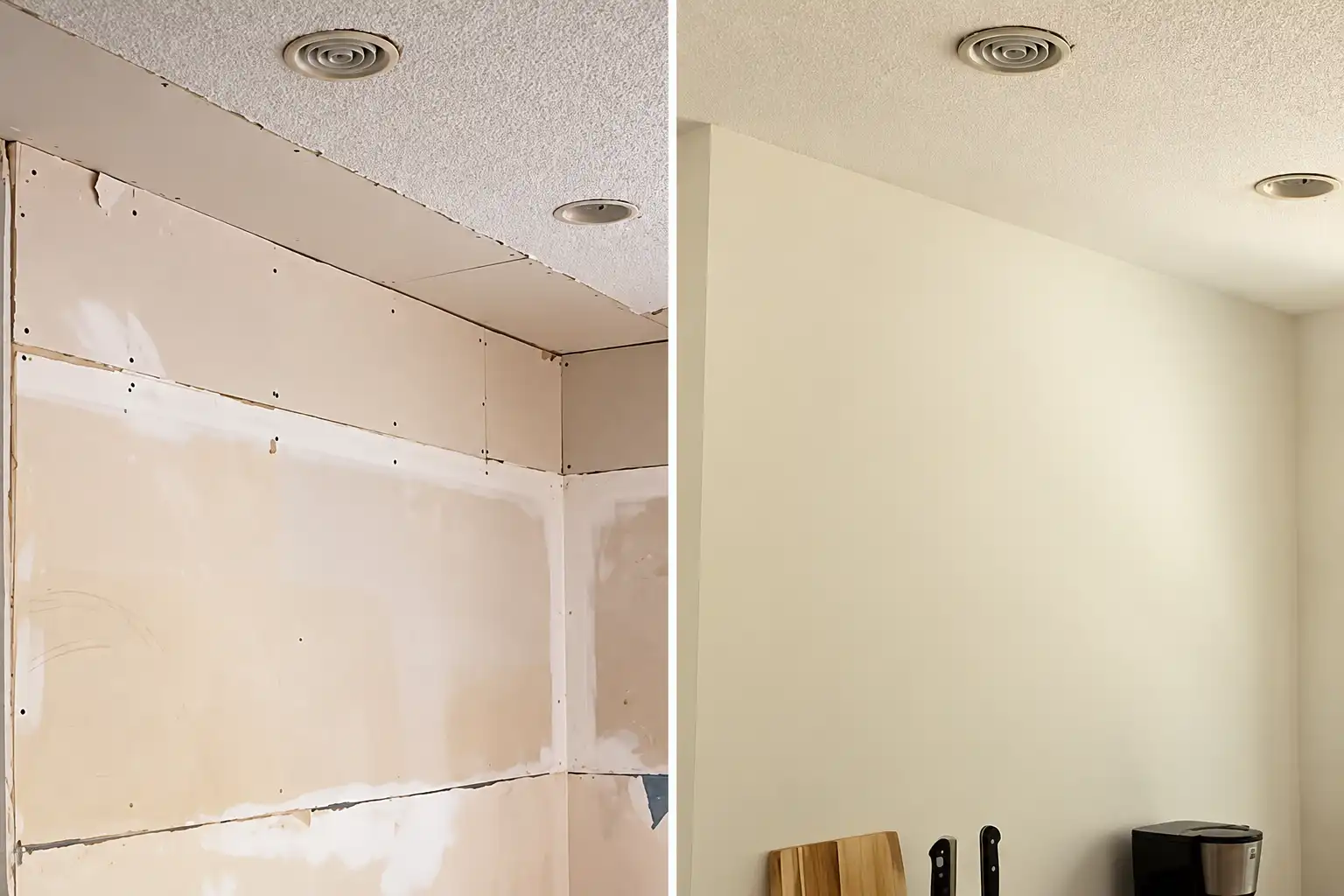
Level 4 finish is the standard used for most residential walls under regular paint or light texture, with joints and fasteners coated and sanded smooth. Level 5 adds a thin skim coat over the entire surface, which is recommended for areas with bright, direct, or raking light, glossy paint, or ceilings where imperfections are easiest to spot. We can recommend the right level based on your lighting and finish plans.
Yes. We regularly complete drywall repair and finishing in occupied residential buildings and strata properties, coordinating access and scheduling with residents, property managers, or building staff so the work happens with minimal disruption.
It depends on the size of the room and the finish level. Joint compound has to dry between coats, and it has to be sanded before the next step, so even a small room takes a few days. A whole floor or a project with several units takes longer and is scheduled around drying times and access. We'll give you a realistic timeline when we quote the job.
Drywall mudding and taping typically costs around $2 per sq. ft. in Surrey, but every job is different. The size of the area matters most. After that, it comes down to the finish level, since Level 5 needs more work than Level 4, plus the condition of the walls, how many repairs there are, whether the work is on ceilings, and whether we need to match a texture. We give a quote once we've seen the job, because a guess over the phone is rarely accurate.
Almost. Once the last coat is sanded smooth and the dust is wiped off, the wall is ready for primer. Primer matters because joint compound soaks up paint differently than the paper on the drywall, and without it you can see the seams through the paint.
Yes. Patch and repair work is a regular part of drywall finishing, and matching the surrounding texture, sheen and finish level keeps the repair from showing once the wall is painted. If you're not sure whether you only need a small patch or a bigger repair, how to repair a hole in drywall explains what the damage involves.
Talk to our team about your walls, ceilings, or repair work.