
Protection & Prep
Furniture is moved or covered, floors are protected, trim is taped, and walls are cleaned, sanded, filled, and smoothed.
Interior painting in Surrey is priced by the job, not by one flat rate. The final number depends on how large the space is, what condition the walls are in, how much prep is needed, and which paint and finish go on. Two rooms of the same size can end up at very different prices for exactly those reasons.
This guide breaks down every factor that moves the price, from room size and wall prep to ceilings, trim, paint quality, coats and kitchen cabinets, so quotes are easier to compare. Because every home is different, the most accurate number comes from a quote based on your actual walls. Talk to our Surrey interior painters once you know what your project involves.

Two quotes for the same room can look far apart, and that is usually because they cover different amounts of work. One may include patching, priming, trim and two full coats, while another covers only a quick roll of the walls.
Comparing quotes properly means looking at the same list of factors each time. The sections below explain what each one is and why it changes the price.
Larger rooms need more paint and more hours, so size is the first thing a painter measures. What counts is the total wall area, not the floor area, which means a tall, narrow room can cost as much as a wider one.
Layout matters too. Open plan spaces with long walls, stairwells, and rooms with many windows and doors involve more cutting in around edges, and that takes longer than rolling a flat wall.
Prep is where much of the labour goes, and it is the factor that varies most between homes. Smooth walls in good shape need only cleaning and light sanding. Walls with dents, nail holes, cracks, old wallpaper residue or water staining need patching, sanding and often primer before any colour goes on. Bigger damage, like a hole in the drywall, needs a proper repair before painting or it will show through.
Older Surrey homes with layers of previous paint usually need more prep than newer builds. It can look like extra cost, but skipping prep is what causes peeling, uneven sheen and visible patches within a year or two.
Furniture is moved or covered, floors are protected, trim is taped, and walls are cleaned, sanded, filled, and smoothed.
Bare drywall, patched areas, water staining, or a major colour change receive primer before the finish coats go on.
Edges and trim lines are cut in by hand, then walls are rolled for even coverage and a consistent finish.
The finished space is inspected, touch-ups are completed, and the area is left clean for handover.
Ceilings are priced separately from walls because overhead work is slower and harder on the painter. Higher ceilings need taller ladders or scaffolding, which adds setup time, and textured ceilings hold more paint and take longer to coat than flat ones. A ceiling with cracks, sagging or water damage needs ceiling drywall repair before it is painted.
Older popcorn ceilings should be tested for asbestos before anyone scrapes or sands them. Painting ceilings at the same time as the walls is usually more efficient than treating them as a second job later.
Baseboards, window casings, crown moulding and doors take more careful work than open wall. Each piece needs sanding, a clean edge and usually a harder wearing paint such as semi-gloss. The more trim a home has, and the more doors that are painted on both sides, the more time the job takes.
Some quotes cover walls only, so check whether trim and doors are included before comparing totals.
Paint comes in several grades, and better paint usually costs more per can. Higher quality paint tends to cover better, hold its colour longer and wipe clean more easily, which can mean fewer coats and a finish that lasts.
Finish plays a part as well. Eggshell or satin suits most living rooms and bedrooms, while kitchens, bathrooms and hallways do better with satin or semi-gloss. Strong or dark colours can also raise the price because they often need extra coats or a tinted primer.
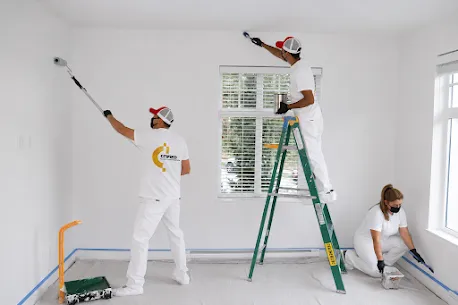
Most interior jobs include primer where it is needed plus two coats of finish paint. Every extra coat adds paint and labour. Going from a dark colour to a light one, or covering stains, can take more than the usual number of coats.
When comparing quotes, check how many coats each one includes. A lower price with a single coat is not a fair comparison with a quote that includes two.
Cabinet painting is priced differently from wall painting because it is closer to a finishing job. The biggest driver is the number of doors and drawer fronts, since each one is prepped and painted on both sides.
Condition and material matter next. Kitchen cabinets collect grease, so they need thorough degreasing and sanding, and worn or chipped surfaces need repair before painting. Open grain wood may need filling to get a smooth finish.
The method also changes the price. Doors that are removed and sprayed give a smoother result than doors painted in place, but they take more handling. Whether the cabinet boxes, the insides and the hardware are included will change the total as well, along with the durable paint system that cabinets need to stand up to daily use.
Colour trends shift, but a few choices consistently work well for the Lower Mainland climate and the light most Surrey homes get.
Warm neutrals, soft greiges, and off whites remain the most requested colours because they suit both older character homes and newer builds, and they make rooms feel larger, which matters in Surrey's many townhouses and smaller resale homes.
For finish, eggshell or satin is the standard for living rooms and bedrooms since it is easy to clean without showing every roller mark the way semi-gloss can. Kitchens, bathrooms, and hallways usually get a satin or semi-gloss finish because it holds up better against moisture and everyday wear.
If you are painting before selling, sticking to warm neutrals across connecting rooms helps the whole main floor feel cohesive to a buyer walking through, rather than a patchwork of accent walls.
Not every painter operating in Surrey is licensed, insured, or set up to handle a full interior job properly.
The most accurate price comes from a written quote based on your own walls. See our painting services or ask for a quote that spells out prep, coats and finish.
Request a Free QuoteInterior painting in Surrey typically costs more for larger rooms, higher ceilings, and walls needing extra prep such as patching or priming. Most contractors price by wall area, prep and number of coats rather than a flat rate, so an in-home quote gives the most accurate number for your specific space.
A single room usually takes one to two days including prep, priming, and two coats of paint. A full main floor or whole home repaint can take three to seven days depending on square footage, wall condition, and whether trim and ceilings are included.
Yes, in most cases. Priming is especially important when covering a dark colour with a lighter one, painting bare or patched drywall, or dealing with any water staining. Skipping primer often leads to blotchy colour and a shorter lasting finish.
Eggshell or satin finish works well for living rooms and bedrooms because it hides minor wall imperfections while staying easy to clean. Kitchens, bathrooms, and hallways typically do better with satin or semi-gloss since those areas see more moisture and daily wear.
DIY painting saves on labour cost but often costs more in the long run if prep work is skipped, since a poorly prepped wall needs to be repainted sooner. A licensed contractor also carries insurance, which matters if anything is damaged during the job.
Most interior walls hold up well for five to seven years before needing a fresh coat, though high traffic areas like hallways, kitchens, and children's rooms may need touch-ups sooner due to daily wear and cleaning.
Yes. Citified Planning & Construction Ltd. provides an in-home assessment and a written quote covering prep work, number of coats, and finish before any work begins, so homeowners know the full cost upfront.
Talk to our team about interior painting, drywall repair, or a fuller renovation plan for your Surrey home.